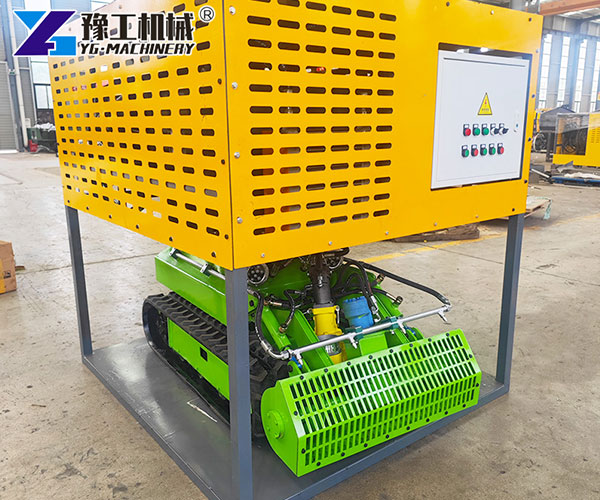
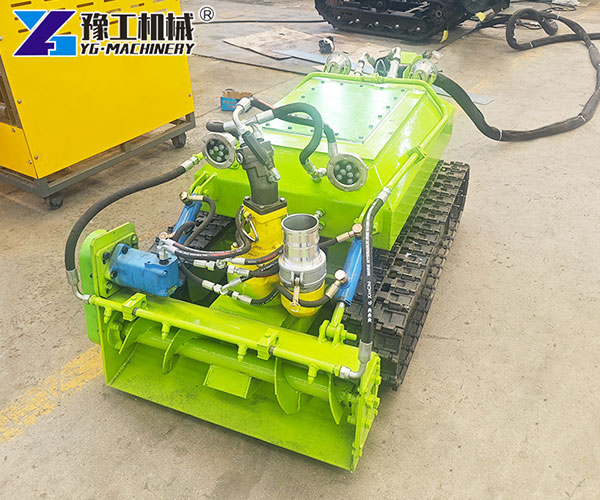
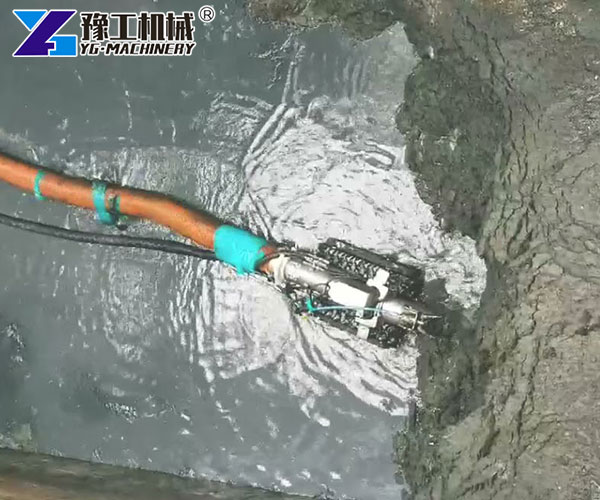
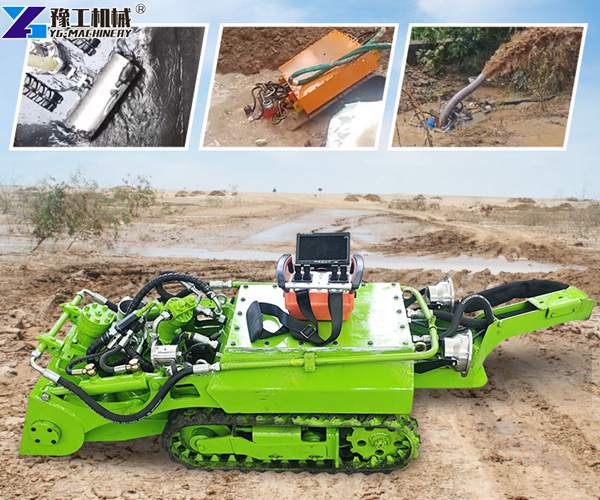
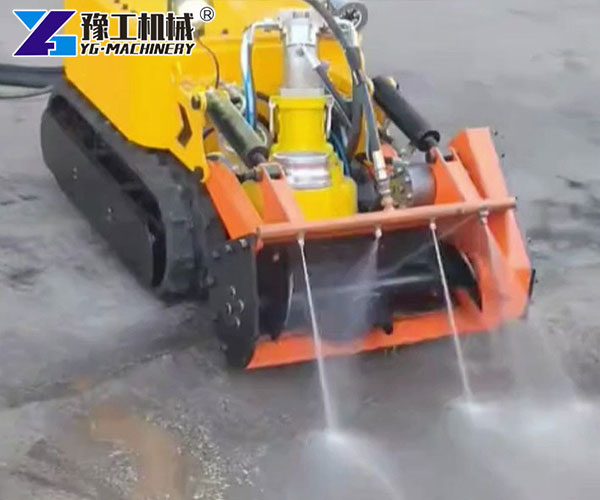
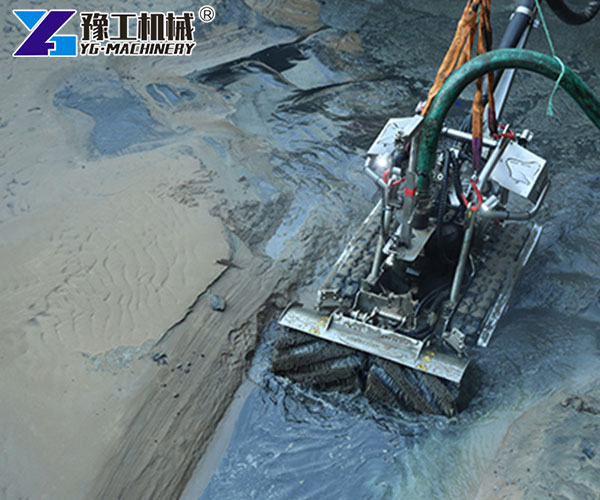
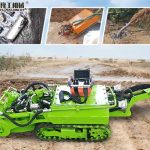
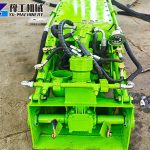
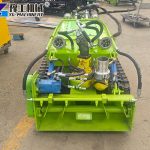
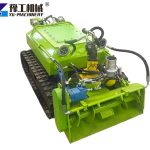
A Brunei client ordered a Reservoir Desilting Robot for Sale from YG Machinery. The unit was shipped in secure packaging, delivered successfully, and is now operating on site.
The project site is a municipal reservoir in Brunei used for both water supply and flood control. Over the years of operation, sediment built up and reduced storage capacity. Measurements showed that the silt layer averaged 1.2–1.8 meters, affecting water regulation and safety.
The project faced strict government rules:
Reservoir water could not be drained
Heavy equipment was not allowed on the embankment
Noise level had to stay low
Turbidity had to meet environmental limits
At the same time, the rainy season was approaching. The contractor needed a fast solution. Local teams lacked professional underwater sludge removal equipment, so they had to import a specialized machine.
Client Selection Process Before Purchase
The client did not choose immediately. Their engineers compared three technical options before deciding on a Reservoir Desilting Robot for Sale solution.
Solutions evaluated:
Traditional cutter suction dredger
Amphibious excavator
Remote reservoir cleaning robot
Evaluation standards:
Shipping cost to Southeast Asia
Assembly difficulty
Labor required for operation
Long-term maintenance cost
Reasons other options were rejected:
The dredger required disassembly and a long installation time
The amphibious excavator exceeded slope load limits
Local rental machines lacked accurate control
The key point is clear: the client made the decision based on cost-risk analysis and site limits, not marketing promises. This is important for buyers who want real data before ordering.
The selected reservoir dredging robot matched the site needs because of its design and operating method.
Main matching points included:
Modular structure that fits into a standard container
Remote control distance up to 150 meters
Adjustable cutter head for mixed sediment and organic sludge
Stable hydraulic system suitable for restricted zones
Because the machine works in water and is controlled from shore, it did not damage the embankment or disturb nearby structures. The remote system also improved safety because workers stayed away from deep water.
The reservoir dredging robot also allowed precise cleaning. Operators could target thick sediment zones without disturbing clean areas. This helped keep turbidity within limits.
Underwater Sludge Removal Equipment: Real Limitations
To build trust, the supplier explained the real limits of the underwater sludge removal equipment before shipment. This helped the client prepare correctly.
Actual limitations included:
Requires a hydraulic power supply from shore, which limits working distance
Operators need short training before use
Cannot process debris larger than 80 mm without pre-screening
These points were not hidden. Instead, they were discussed in advance. Because of this, the buyer arranged a generator and debris screening plan before delivery.
This transparency is important. Buyers often face delays when equipment limits are not explained early. In this project, preparation avoided downtime.
Delivery And Deployment Process
The production and export process followed a clear schedule so the equipment arrived before the rainy season.
Timeline:
Manufacturing period: about 18 days
Sea freight to Brunei port
Customs clearance completed smoothly
On-site assembly finished in 6 hours
Commissioning was done through remote video guidance. Engineers showed local staff how to start, operate, and maintain the machine. Training took only one day because the control system is simple.
The compact design reduced shipping costs and made unloading easy. No special cranes were required. This is a major advantage for overseas buyers choosing a Reservoir Desilting Robot for Sale.
After deployment, the reservoir sediment removal robot began regular operation. Measured data showed clear results:
Average dredging efficiency: 40–55 m³/h sediment
Turbidity stayed within environmental regulation limits
Required workers reduced from the planned 8 to only 2
Operating cost is about 37% lower than the dredger rental estimate
Client feedback summarized:
The remote control stayed stable even in the rain
Maintenance was simple
Suitable for reservoirs with narrow access
However, the client also reported one realistic note: in very compact clay layers, cutting speed decreased. This is normal for most dredging machines and helps future buyers understand real performance expectations.
Practical Insights For Future Buyers
This case provides useful guidance for procurement teams comparing dredging solutions.
When Robots Are Better Than Dredgers
The site has strict environmental rules
Water cannot be drained
Access roads are narrow
Installation time must be short
Ideal Conditions For Robotic Cleaning
Medium-depth sediment layers
Mixed sludge composition
Remote or overseas project sites
Budget Vs Efficiency Logic
Robots cost less to ship
Require fewer workers
Lower long-term fuel or rental expense
Logistics Advantages For Overseas Buyers
Container shipping friendly
Fast assembly
No heavy foundation needed
Supplier Capability Proven Through This Project
Instead of advertising claims, this case shows real service ability through facts:
Custom configuration based on sediment analysis
Professional export packing to prevent shipping damage
Remote technical guidance during installation
Spare parts response plan for overseas users
Electrical system compliant with international standards
Each step shows practical support, not just equipment supply. For international buyers, service ability is often more important than price alone.
Still don’t know how to choose? Let our experts help you find the perfect solution.