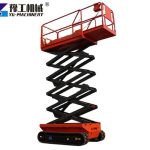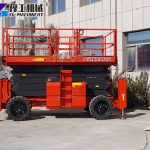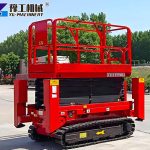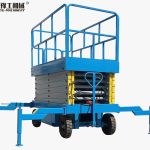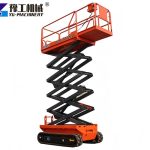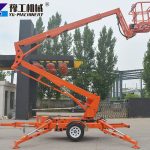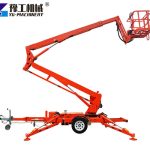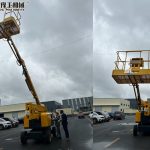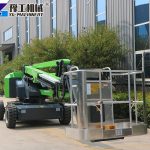
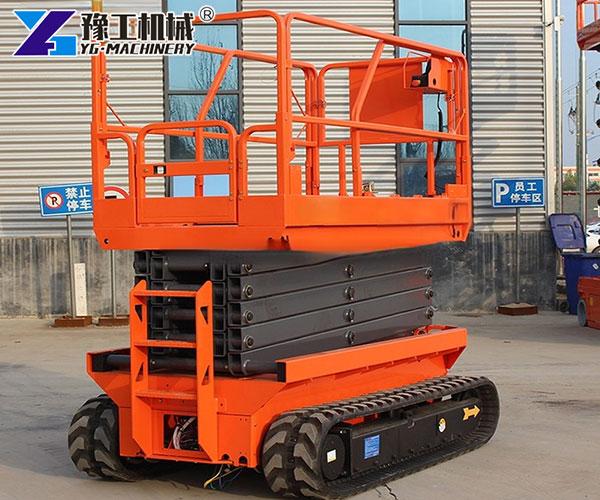
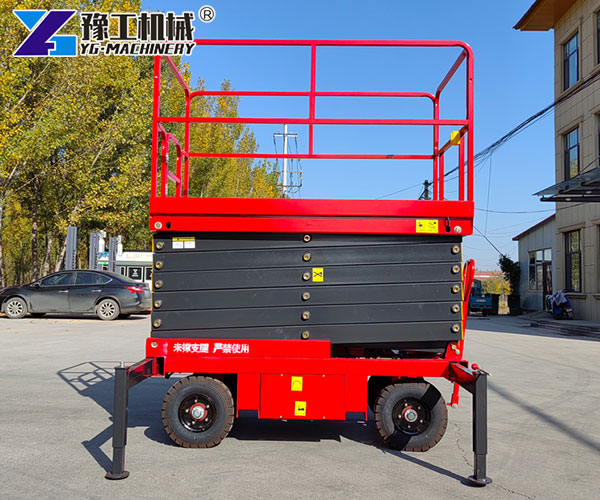
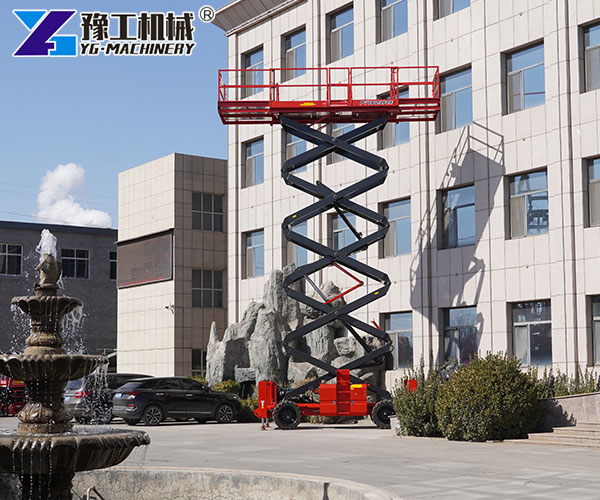
A Self Propelled Scissor Lift is widely used in modern construction, maintenance, and warehouse work. It allows workers to reach high places safely and quickly. The machine combines lifting and driving functions, so operators can control movement and elevation directly on the platform.
Compared with traditional lifting equipment, a modern aerial work platform lift greatly improves efficiency. Workers do not need to move the machine manually between work points. This makes it ideal for projects where multiple positions must be reached during the same task.
Because of its strong structure, high stability, and flexible movement, this lifting equipment has become a common solution in industries such as construction, facility maintenance, logistics, and municipal engineering.
What Is A Self Propelled Scissor Lift?
A Self Propelled Scissor Lift is a type of lifting equipment designed to raise workers and tools to different heights. It combines a hydraulic lifting system with a mobile driving system.
This machine is also called:
- self driving scissor lift
- mobile scissor lift platform
The main feature is that the operator can control both lifting and driving directly from the platform.
Unlike traditional scissor lifts, this machine does not require:
- Forklift towing
- Manual pushing
- External traction equipment
The operator simply stands on the platform and controls the machine using the control panel.
Because of this design, it is very suitable for:
- Work that requires movement between several positions
- Aerial tasks that need frequent repositioning
This improves work efficiency and reduces labor costs.
Product Parameter of Self Propelled Scissor Lift
Typical specifications of a Self Propelled Scissor Lift may include the following:
| Parameter | Typical Range |
|---|---|
| Working Height | 6–18 m |
| Platform Height | 4–16 m |
| Load Capacity | 300–500 kg |
| Heavy Duty Capacity | Up To 1000 kg |
| Platform Extension | 0.9–1.5 m |
| Machine Width | 0.8–2.3 m |
| Power Source | Battery / Diesel |
| Drive Mode | 2WD / 4WD |
Different models are designed for indoor work, construction sites, or narrow spaces.
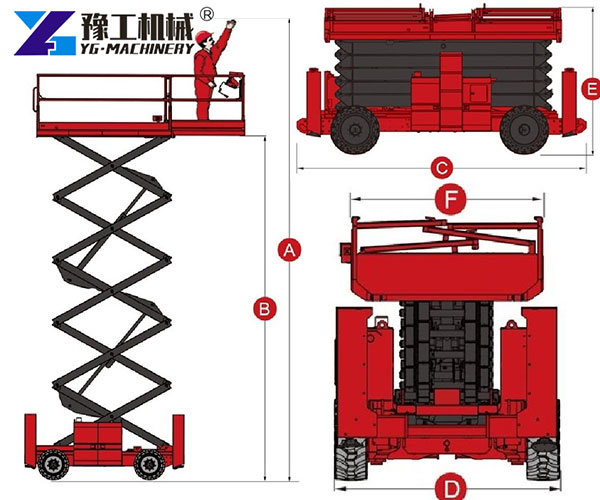
Core Structure And Working Principle
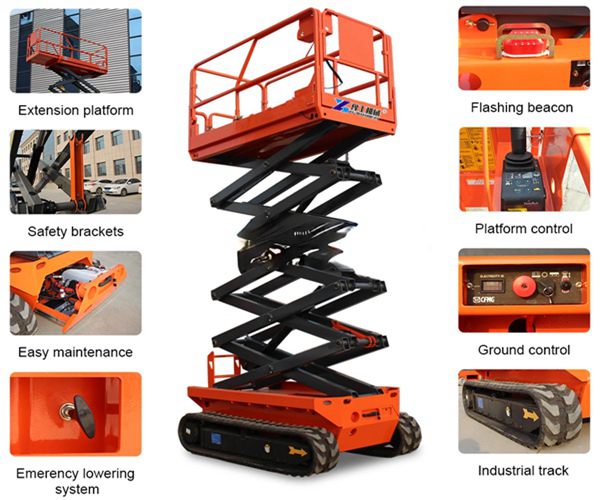
The lifting system works through hydraulic power and a scissor-type steel structure. When the hydraulic pump pushes oil into the cylinder, the scissor arms open and raise the platform.
Scissor Arm Mechanism
The scissor arm structure is the main lifting system of the machine.
Key characteristics include:
- Cross-linked steel structure
- Hydraulic cylinder drive
- Multi-layer scissor arms for higher lifting height
Advantages:
- High structural stability
- Smooth vertical lifting
- Strong load capacity
This design allows the platform to remain stable even when carrying tools and materials.
Working Platform
The working platform is the area where operators stand during aerial work.
Main components include:
- Safety guardrails
- Control panel
- Extension deck
Typical load capacity:
- 300–500 kg for standard machines
- 1000 kg or more for heavy-duty models
The extension deck allows workers to reach areas that are slightly beyond the platform edge.
Drive System And Chassis
The driving system allows the machine to move smoothly between work locations.
Common driving options include:
- Electric motor drive
- Internal combustion engine
- Four-wheel drive system
The electric scissor lift model has several advantages:
- Lithium battery or lead-acid battery
- Zero emission operation
- Low noise performance
Because of these features, electric models are widely used in:
- Shopping malls
- Warehouses
- Factories
Safety Protection System
Safety is a very important part of aerial lifting equipment.
A modern aerial work platform lift usually includes multiple protection systems:
- Tilt protection system
- Overload alarm
- Emergency lowering system
- Platform gate lock
- Emergency stop button
These systems help prevent accidents during operation.
Product Categories of Self-propelled scissor lifts
Self-propelled scissor lifts are available in several types depending on the working environment.
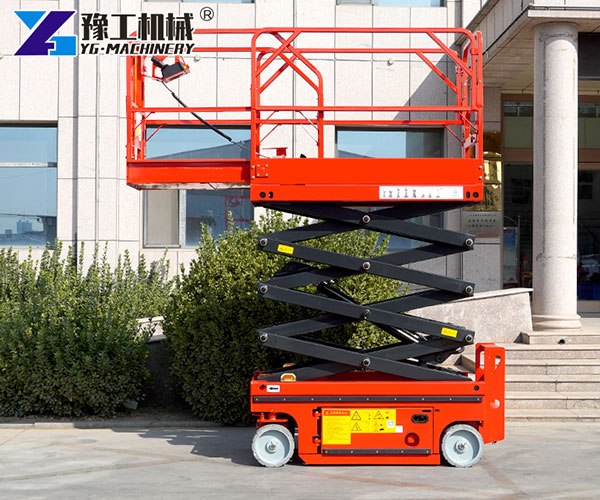
Electric Scissor Lift
The electric scissor lift is mainly designed for indoor use.
Main features:
- Quiet operation
- Zero exhaust emission
- Non-marking tires
Working height:
- 6–14 meters
Typical application environments:
- Warehouses
- Shopping malls
- Factories
- Clean workshops
Because of the low noise and no pollution, this type is very popular for indoor maintenance work.
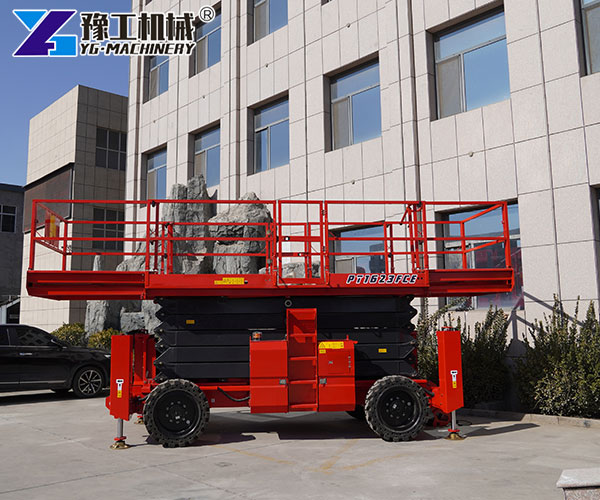
Rough Terrain Scissor Lift
The rough terrain scissor lift is built for outdoor and construction site conditions.
Key features include:
- High-power diesel engine
- Four-wheel drive system
- Large off-road tires
- Automatic leveling system
Working height:
- 12–18 meters or higher
Typical applications include:
- Construction sites
- Outdoor installation work
- Municipal engineering projects
This model can move safely on uneven ground.
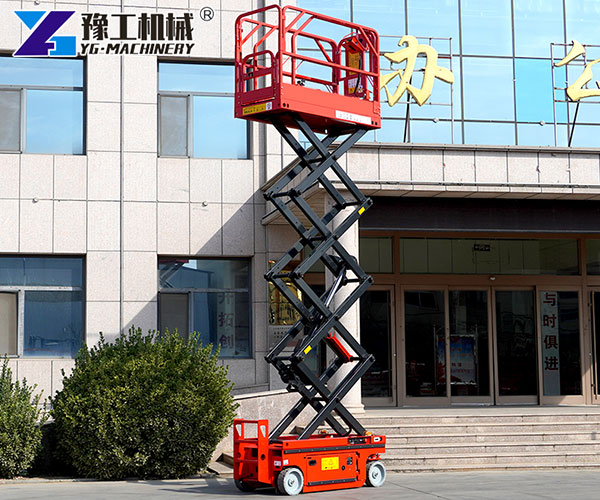
Mini Self Propelled Scissor Lift
Mini models are designed for narrow working environments.
Key characteristics:
- Machine width less than 1 meter
- Can enter elevators
- Small turning radius
Typical uses:
- Shop decoration projects
- Equipment room maintenance
- Indoor narrow spaces
This compact design allows the mobile scissor lift platform to work in places where larger machines cannot enter.
Key Advantages Of A Self Propelled Scissor Lift
High Stability
The scissor structure combined with a low center of gravity gives the platform excellent stability.
Advantages include:
- Large working platform
- Stable lifting performance
- Suitable for precise aerial operations
Higher Work Efficiency
Workers can control the machine directly on the platform.
Operations include:
- Moving
- Steering
- Lifting
All functions can be completed without ground staff assistance.
This greatly improves project efficiency.
Flexible Movement
A Self Propelled Scissor Lift is designed for easy movement.
Important features include:
- Zero-turn steering
- Small turning radius
- Fast switching between work points
These features make the machine suitable for projects with many working positions.
High Safety Level
Safety systems ensure stable aerial work.
Protection features include:
- Tilt protection
- Overload protection
- Emergency lowering system
These systems help reduce risks during operation.
Applications Of Self Propelled Scissor Lifts
This lifting equipment is used in many industriesConstruction Industry
Typical uses include:
- Exterior wall construction
- Curtain wall installation
- Ceiling work
Industrial Maintenance
Used for tasks such as:
- Factory equipment maintenance
- Pipe repair
- Lighting installation
Warehouse And Logistics
Used for:
- High shelf storage access
- Warehouse inspection
- Ceiling equipment maintenance
Municipal Maintenance
Common work includes:
- Streetlight repair
- Billboard installation
- Tree trimming
Exhibition And Commercial Centers
Applications include:
- Shopping mall decoration
- High-level cleaning
- Exhibition hall setup
When A Self Propelled Scissor Lift May NOT Be Suitable
Although this machine is very useful, there are situations where other equipment may be better.
Extremely Rough Or Sloped Terrain
If the ground is:
- Muddy
- Steep or unstable
It may be better to use:
- Boom lift
- Crawler aerial platform
Ultra High Working Height
If the required height is more than:
- 20–25 meters
A telescopic boom lift may be more suitable.
Very Narrow Working Area
If the working space has:
- Very narrow passages
- Many obstacles
A scissor lift may not be flexible enough.
How To Choose The Right Self Propelled Scissor Lift
Selecting the correct model depends on several factors.
1. Working Height
Choose according to project needs:
- 8 m
- 10 m
- 12 m
- 14 m
- 18 m
2. Indoor Or Outdoor Use
Indoor projects:
- Choose an electric scissor lift
Outdoor construction sites:
- Choose a rough terrain scissor lift
3. Platform Load Capacity
Consider the weight of workers and equipment:
- 300 kg
- 500 kg
- 1000 kg
4. Machine Width And Access
Check access conditions such as:
- Door width
- Elevator size
- Passage width
5. Power Source
Available power options include:
- Battery powered
- Diesel engine
- Hybrid power system
Why Choose A Self Propelled Scissor Lift For Aerial Work
A Self Propelled Scissor Lift provides a safe and efficient way to perform aerial work.
Key advantages include:
- Higher work efficiency
- Reduced labor cost
- Stable and safe working platform
This equipment is widely used in:
- Construction projects
- Industrial maintenance
- Warehouse logistics
- Municipal engineering
For companies that require efficient and safe lifting equipment, the Self Propelled Scissor Lift is one of the most practical aerial working solutions.
Frequently Asked Questions
1. What Is The Maximum Working Height Of A Self Propelled Scissor Lift?
Most models provide working heights between 6 and 18 meters.
2. Can The Machine Move When The Platform Is Raised?
Yes. A self-propelled model can move slowly while the platform is elevated.
3. What Is The Typical Platform Capacity?
Standard models carry 300–500 kg, while heavy models can reach 1000 kg.
4. Is An Electric Model Suitable For Indoor Use?
Yes. The electric version produces no exhaust gas and low noise.
5. How Often Should The Equipment Be Maintained?
Regular inspection should be done before use and weekly.
6. What Safety Standards Do Scissor Lifts Follow?
Most machines follow EN280 and ANSI A92.6 standards.
Self Propelled Scissor Lift Manufacturer — YG Machinery
YG Machinery is a professional manufacturer of aerial work equipment. The company supplies reliable lifting solutions to customers around the world.
YG lifting equipment features:
- Strong steel structure
- Stable hydraulic lifting system
- Advanced safety protection
- Multiple models for different applications
YG provides high-quality Self Propelled Scissor Lift equipment suitable for construction, maintenance, and warehouse operations.
With advanced manufacturing technology and strict quality control, YG Machinery continues to deliver safe and efficient lifting solutions for global customers.