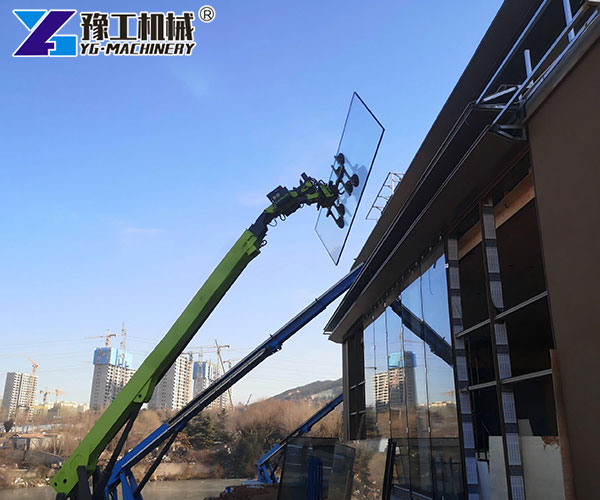
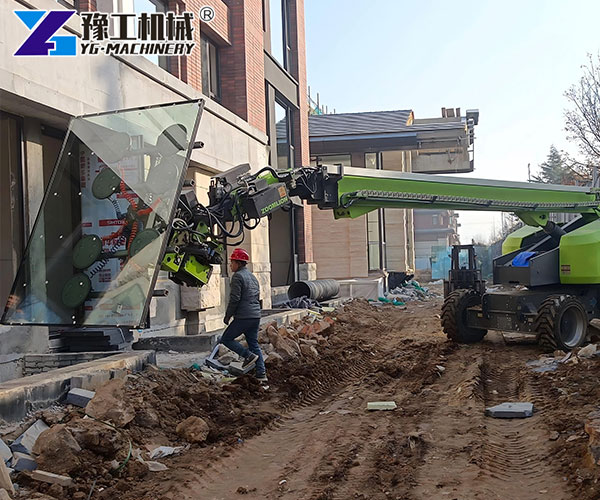
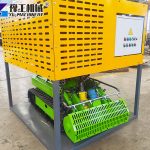
Glass Handling Robot solutions are becoming essential wherever large, heavy, or fragile glass must be moved safely. From factories to construction sites, this equipment helps companies reduce breakage, improve safety, and control labor costs while handling glass with high precision and stability.
Why Glass Handling Has Become a Real Challenge on Modern Job Sites
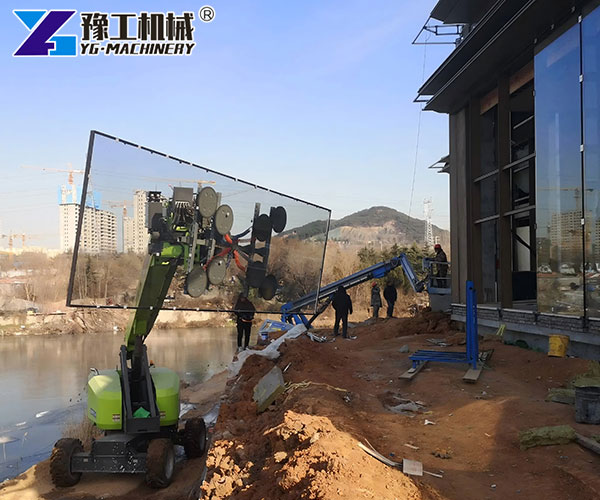
Glass panels are getting larger, heavier, and thinner. Manual lifting is no longer safe or efficient in many projects. A glass lifting robot allows one operator to control glass movement with accuracy and confidence, even in demanding environments.
In real projects, companies face problems such as:
High risk of injury during manual glass handling
Expensive glass damage caused by unstable lifting
Inconsistent installation speed and quality
Growing labor shortages for skilled workers
These challenges push more buyers to consider automated glass lifting solutions.
What Is A Glass Handling Robot
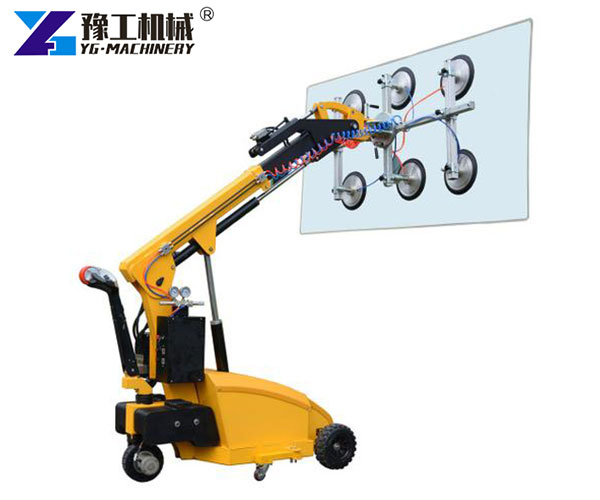
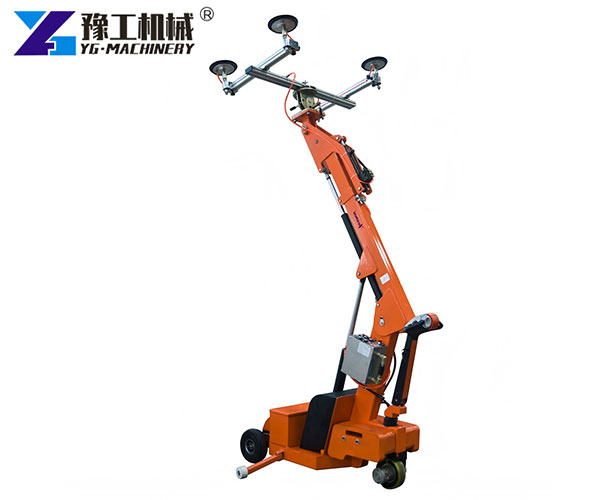
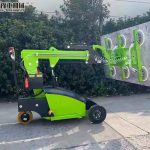
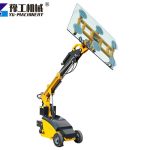
A Glass Handling Robot is a specialized machine designed to lift, move, rotate, and place glass panels using vacuum suction and controlled motion. It is built to handle fragile materials that traditional lifting tools cannot manage safely.
Compared with manual handling or common cranes:
Manual lifting depends heavily on the worker’s strength and experience
Cranes are not designed for flat, fragile surfaces like glass
Glass robots focus on surface protection and precise control
Glass is considered a high-risk handling material because it is:
Heavy but thin
Easy to crack under uneven force
Sensitive to vibration and sudden movement
This is why normal lifting equipment often fails in glass applications.
Parameters of Glass Handling Robot for Sale
Model Type
YG-LD-300
YG-LD-400
YG-LD-500
YG-LD-600
YG-LD-800
Load Capacity
300kg(retract)150kg(extend)
400kg(retract)200kg(extend)
500kg(retract)250kg(extend)
600kg(retract)300kg(extend)
800kg(retract)400kg(extend)
Lifting Height
3500mm
3500mm
3700mm
3700mm
4500mm
QTY of Suction Cap
4pcs
4pcs
6pcs
6pcs
8pcs
Rubber Suction Cap
300mm
Ø300mm
Ø300mm
Ø300mm
Ø300mm
Maintenance-free Battery
2x12V/80AH
2x12V/100AH
2x12V/120AH
2x12V/120AH
2x12V/120AH
Battery Charger
Smart Charger
Smart Charger
Smart Charger
Smart Charger
Smart Charger
Drive motor
24V/1200W
24V/1200W
24V/1200W
24V/1200W
24V/1200W
Lifting Motor
24V/2000W/6L
24V/2000W/6L
24V/2000W/6L
24V/2000W/6L
24V/2000W/12L
Chassis L*W
2660*810mm
2660*810mm
2800*810mm
2800*810mm
2800*810mm
Driving Wheel
Ø250x80mm
Ø250x80mm
Ø300x100mm
Ø300x100mm
Ø300x125mm
Packing Size(mm)
2560*1030*1700
2560*1030*1700
2580*1050*1700
2580*1050*1700
3000*1250*2300
N.W/G.W
1100/1150kg
1280/1330kg
1300/1350kg
1400/1450kg
1600/1650kg
Loading Qty
1x20GP/40GP: 6SETS/12SETS
Movement
Automatic(4 kinds)
1. The suction cup frame flips 180° electrically. 2. The support plate automatically retracts. 3. Hydraulic arm lifts electrically. 4. The base of the whole machine moves 100-150mm horizontally.
Manual (2kinds)
1. The suction cup holder can be manually rotated 90 degrees (electrically powered optional). 2. The suction cup holder can be manually rotated 360 degrees (electrically powered optional).
Usages
Mainly used for the handling, movement, and installation of materials such as glass, marble, wood, iron plate, etc.
Glass has unique physical properties that demand special handling methods. Its smooth surface, weight distribution, and brittleness make it difficult to control without proper tools.
Main challenges include:
High weight combined with a large surface area
Fragile edges that break under uneven pressure
Smooth surfaces that are hard to grip
Manual handling often leads to:
Hand and back injuries
Slipping or tilting during lifting
Sudden glass breakage
In industrial settings, stability is critical. Even small vibrations can cause serious damage, which is why vacuum glass handling equipment is widely used.
vacuum suction glass handling robot
glass lifting manipulator vacuum pads
How A Glass Handling Robot Works
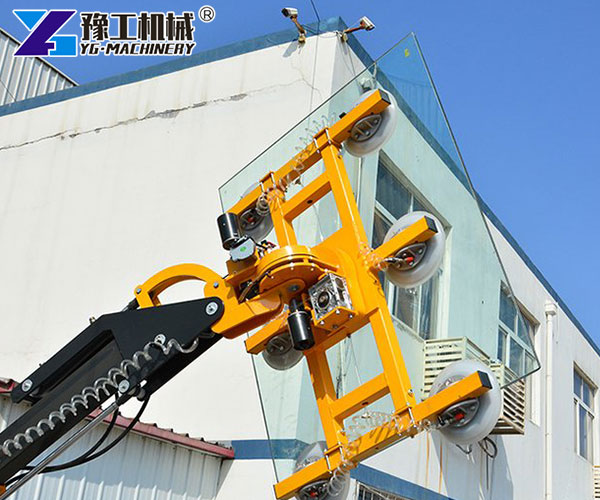
Most glass robots operate using vacuum suction technology. The system creates negative pressure between suction pads and the glass surface, holding it firmly without clamps or hooks.
The working process usually includes:
Vacuum pads attach to the glass surface
The robot lifts the glass evenly
Controlled rotation and tilting for positioning
Smooth movement to the target location
A glass lifting manipulator can adapt to different glass sizes by adjusting pad layout and suction force, allowing safe handling of various panel dimensions.